
When Should You Replace a Snooker Cue Tip?
Recognize wear, damage and poor attachment without replacing a usable tip merely because a fixed number of weeks has passed.
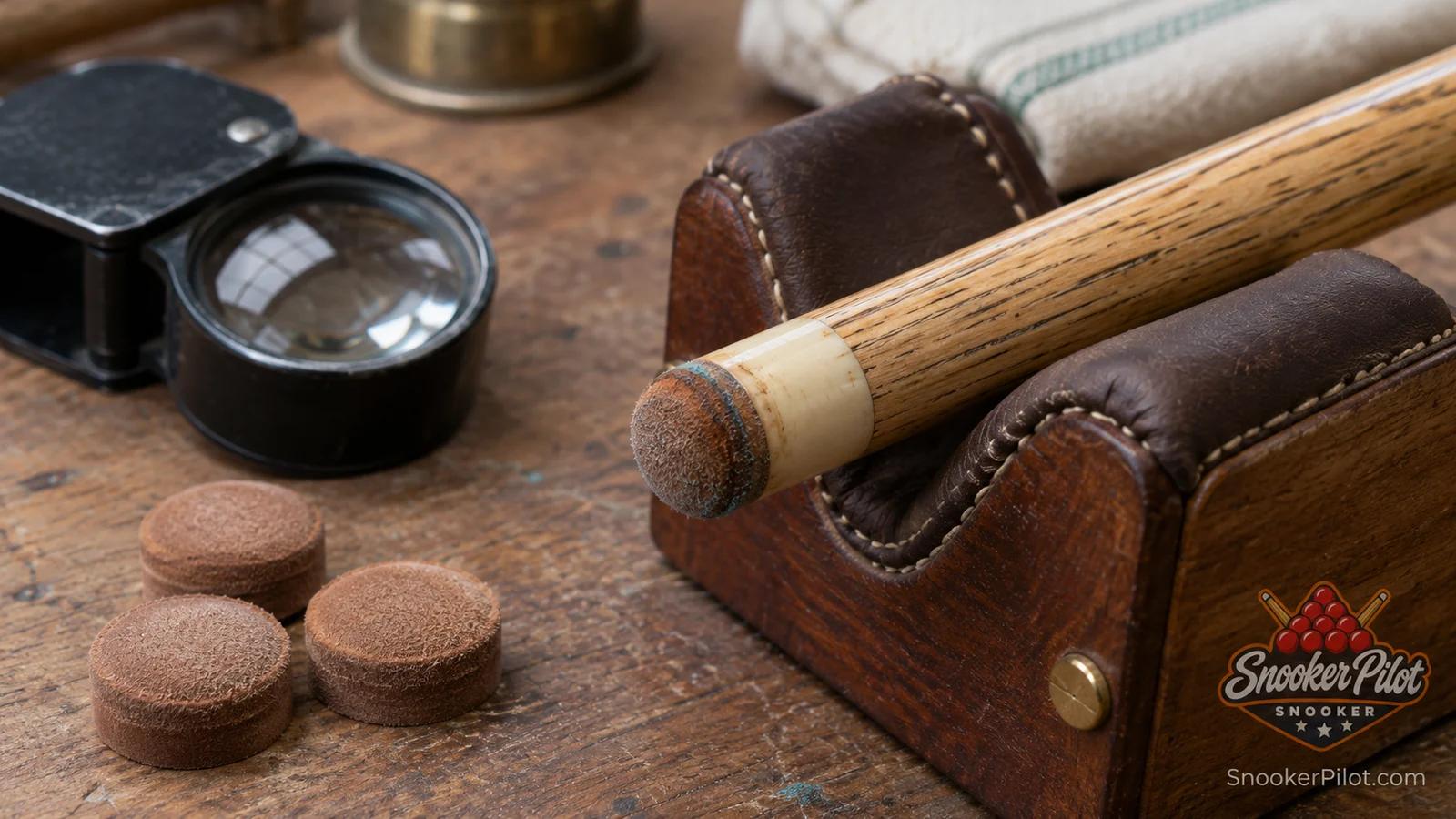
Inspect condition, not the calendar
There is no universal replacement interval. Usage, leather, shaping and maintenance all matter. Check that usable leather remains above the ferrule and that the contact surface has an appropriate shape. Look for cracks, separation, a badly mushroomed edge or a loose bond. Stop using a visibly insecure tip: a failed attachment can damage equipment and interrupt play. Ask a competent technician if the remaining material is uncertain.
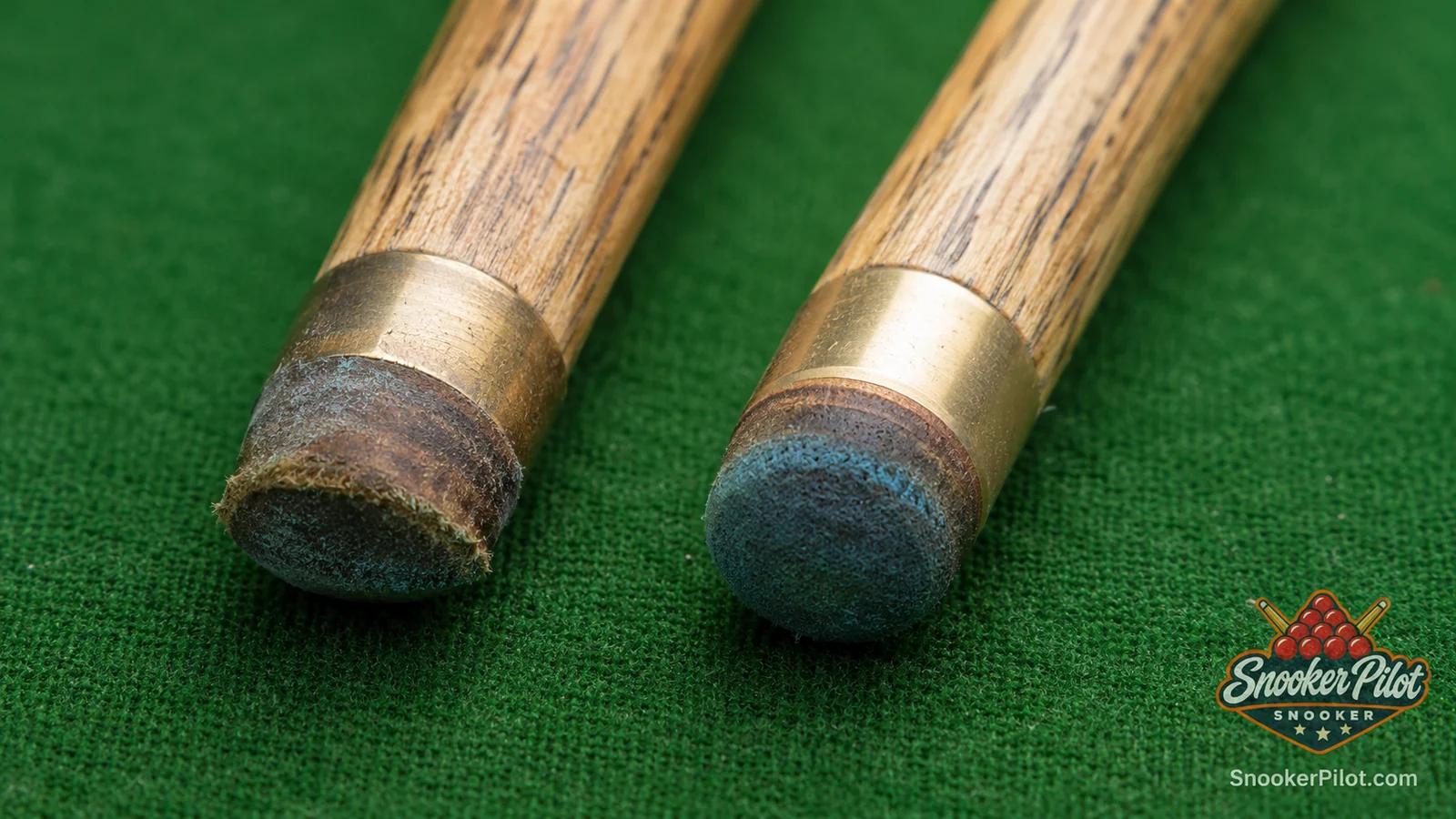
Separate tip trouble from delivery trouble
Repeated miscues can come from striking too far off centre, poor chalk coverage or inconsistent cue delivery. A new tip does not automatically fix those causes. Cleanly chalk the face and try a modest centre-ball shot before making equipment conclusions. If the tip remains unable to hold chalk or its surface is damaged, have it assessed. Avoid aggressive sanding that removes useful leather while trying to solve a technique problem.
How to Choose Your First Snooker Cue: A Practical Buying Guide
Plan a careful replacement
Match the intended diameter and construction to the cue and seek a qualified repairer if you lack the tools or experience. The ferrule and shaft can be damaged by careless cutting. Ask for an appropriate finished shape and follow adhesive curing guidance before playing. Keep a spare cue available during the work rather than rushing an unfinished repair into a busy match.
Allow time to adjust
A fresh tip may feel different even when the nominal size is unchanged. Practise ordinary pots and pace control before an important event. Record what changed and keep other equipment stable. Replace on condition and competent advice, not on the promise that a new brand guarantees a higher break.
At your club with SnookerPilot
SnookerPilot keeps genuine match and break records useful while equipment changes, but it cannot diagnose a tip or identify the cause of a miscue. Clubs can use organized players, clear TV scores and local history while maintaining a separate cue-service log. Queue and tournament features require Club or a higher package.
Compare the packages