
Snooker Stance, Grip and Bridge: How to Build a Consistent Setup
Create a comfortable snooker setup with a stable stance, relaxed grip and dependable bridge instead of copying another player’s body position.
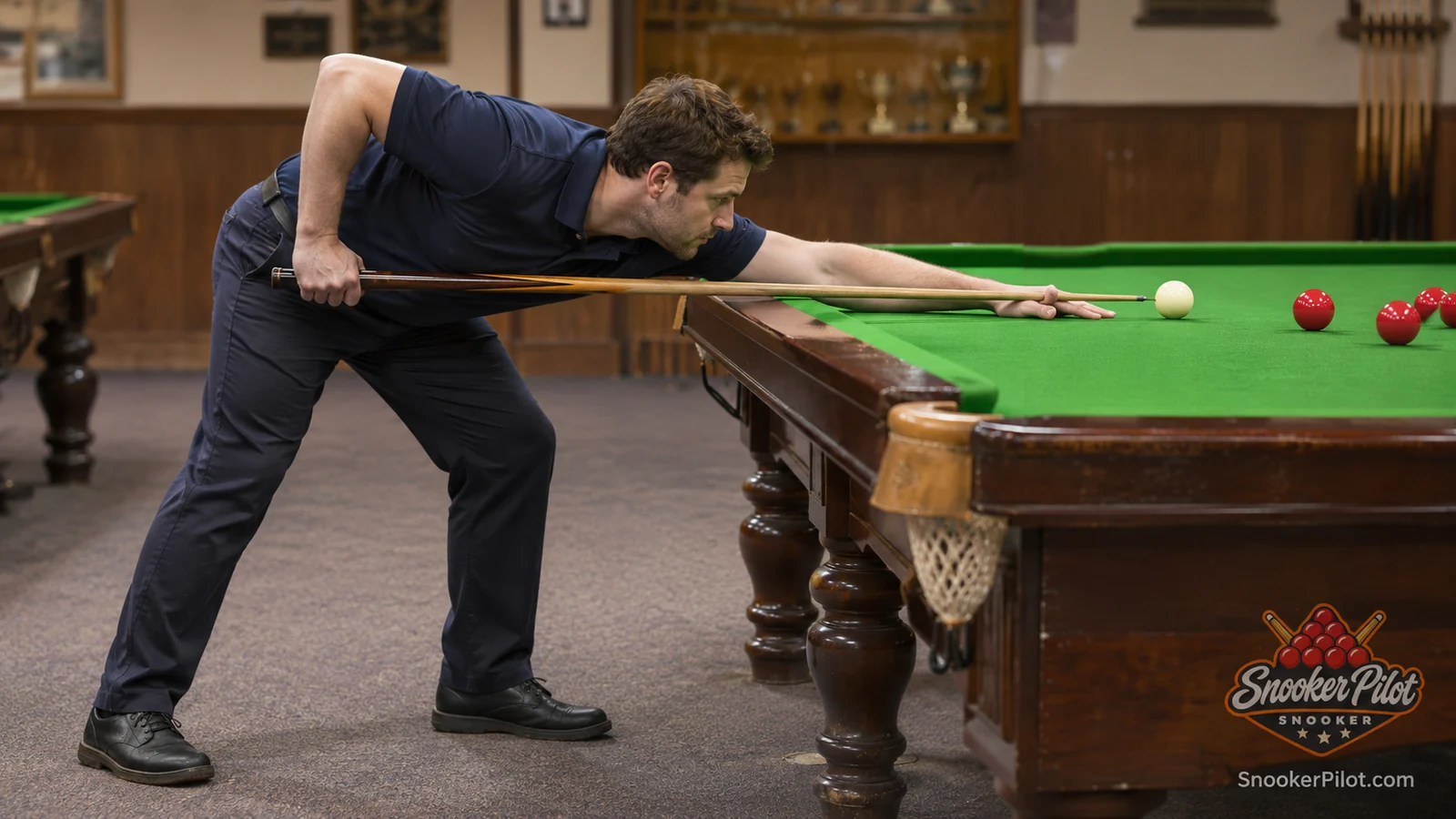
Build around the shot line and your own balance
Find the line while standing and approach it in a repeatable way. Your feet should support a stable position that lets the cue travel freely, without forcing your body into an extreme shape. Players vary in height, flexibility and preferred alignment, so a professional’s photograph is not a complete fitting guide. Check that you can remain balanced through the stroke and get up comfortably afterwards. Ask a qualified coach to observe your setup from different angles rather than chasing a single supposedly perfect stance.
Let the grip support the cue
Hold the cue securely enough to control it without squeezing harder as you deliver. A common beginner habit is to tighten the hand during the final stroke, changing the delivery just as accuracy matters most. Use slow rehearsal movements to notice whether your grip becomes tense or rotates the cue. Start with modest power so you can observe the movement. The goal is repeatability, not an artificially loose hand that loses control or a rigid wrist forced to imitate someone else.
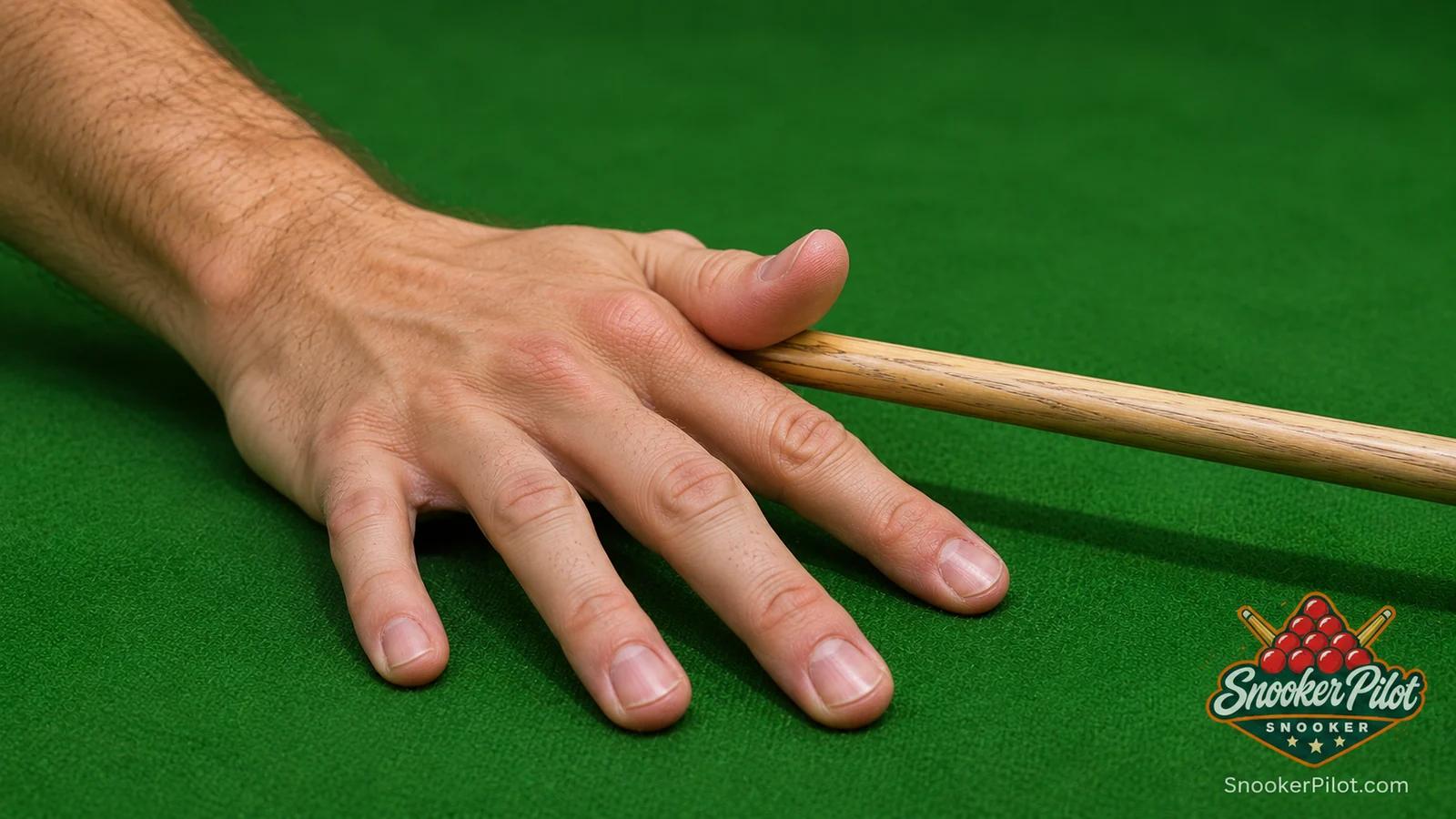
Make the bridge stable before the backswing
Place your bridge hand on a stable surface and create a smooth channel for the cue. Check that fingers are not wobbling as the cue moves. The required bridge length changes with the shot and available space; a comfortable simple centre-ball pot is a better starting point than an awkward reach over reds. For long stretches, use a rest or extension instead of dismantling your setup. Practise retrieving and positioning that equipment during training so it feels ordinary during a match.
Test one adjustment at a time
Choose a straightforward pot and make a short series with the same bridge position and pace. If you alter the grip, keep the other elements unchanged long enough to evaluate it. A brief training video from the side and along the cue line can help a coach identify movement you cannot feel. Keep notes on the adjustment and shot, not just whether one ball dropped. Return to a comfortable baseline if the change makes your setup less stable, and avoid forcing a position that causes discomfort.
At your club with SnookerPilot
A clear SnookerPilot TV display lets players check the score and selected player before rebuilding their stance. Local game history and break records can provide context for longer-term improvement, but they do not diagnose grip or bridge faults. Keep technical coaching notes separate from official club game records, and use the app’s undo action for scoring corrections rather than recording extra trial strokes as match points.
Compare the packages